
Honestly, I thought about skipping HostGator since I figured it was basically Bluehost’s twin.
Wouldn’t a HostGator review just be a copy-paste of my Bluehost review?
First, let’s recap some family history.
1. (Ex) EIG Family Curse?
Founded in 2002, HostGator was later acquired by the Endurance International Group (EIG), along with other hosting providers like Bluehost.
Like Bluehost, there have been a lot of issues with HostGator since. Mostly about downtime (especially in 2013) and security vulnerabilities.
This was largely Bluehost’s fault, but many people became so frustrated with EIG hosting companies that some users compiled a list of them and shared a PSA urging others to avoid them.
Not me, though.
And nope, it’s not for that sweet, sweet affiliate cash.
As an independent blogger, I promised to review every WordPress hosting provider objectively, even if it has some shady associations.
I won’t become an affiliate if I think the host sucks. And who knows, maybe the HostGator apple falls far from the EIG tree?
Moreover, EIG merged with Web.com to form Newfold Digital in 2021, a new company that HostGator has been with since.
Let’s see if HostGator can break the family curse and redeem the Newfold Digital name.
2. Plan
I got the Baby, which comes with:
- 2 CPU cores
- No designated RAM
- 50,000 visitors/mo
- 20GB SSD storage
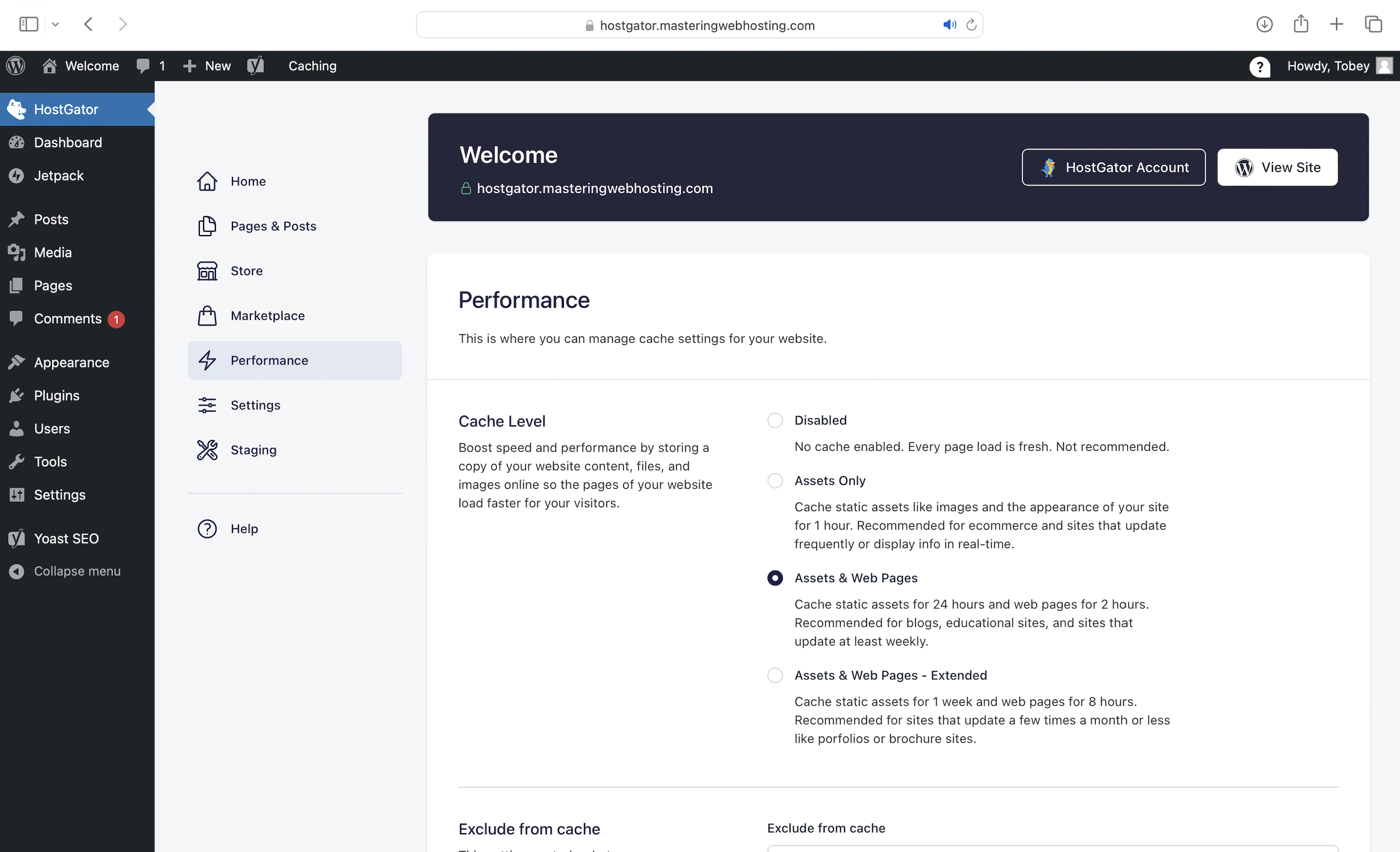
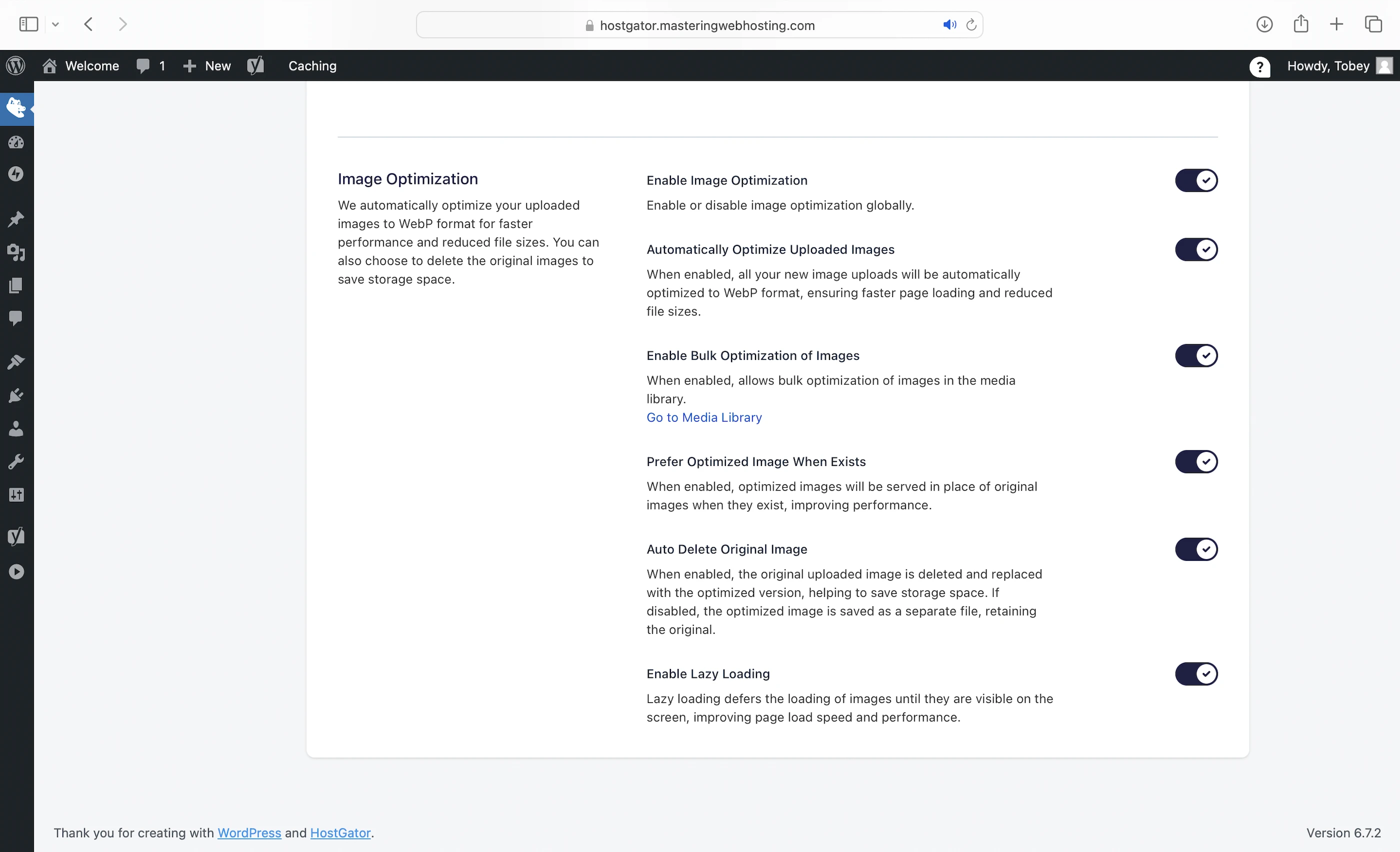
- Free plugin for static content caching and image optimization
- Free CDN
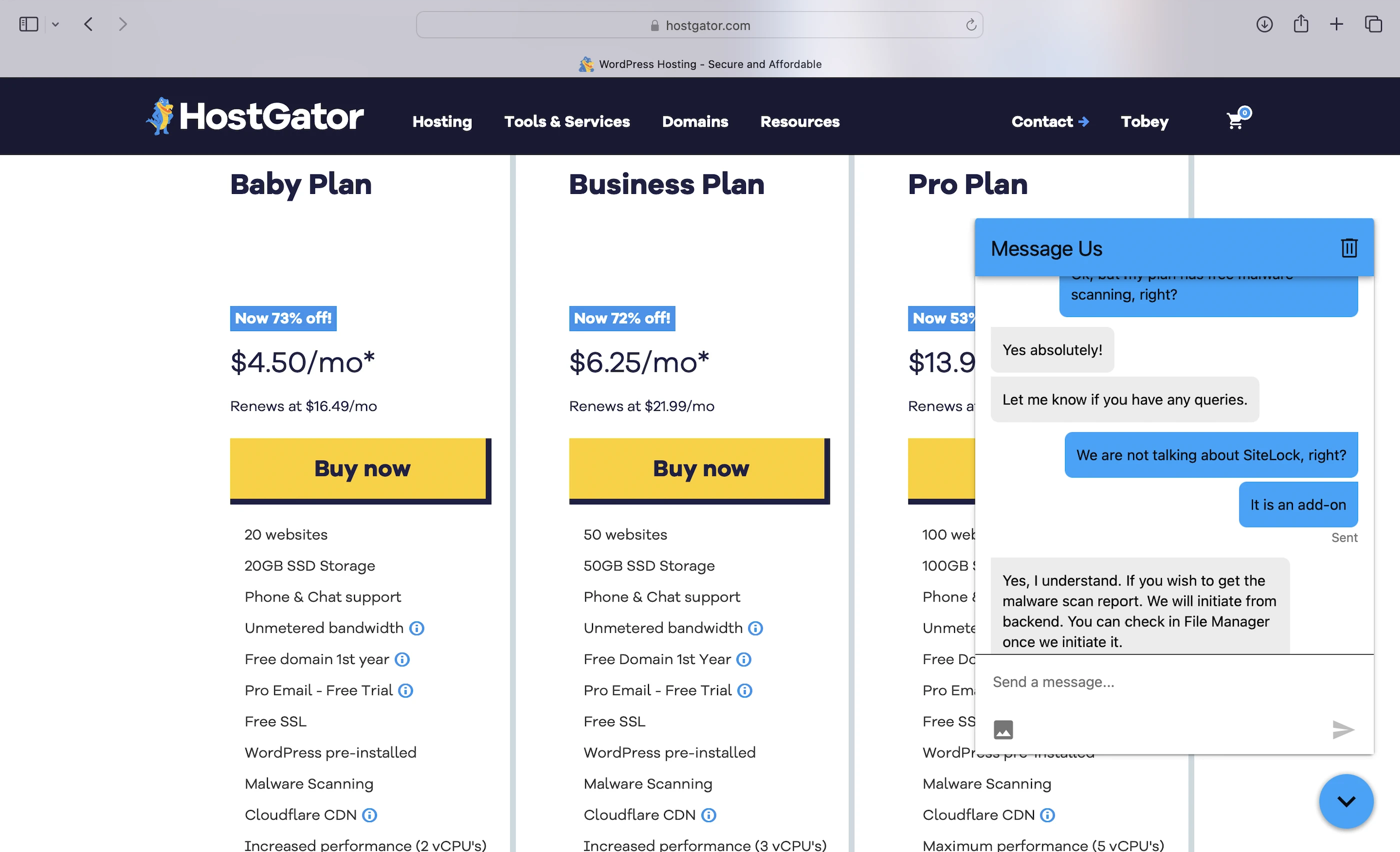
- Free malware scanning
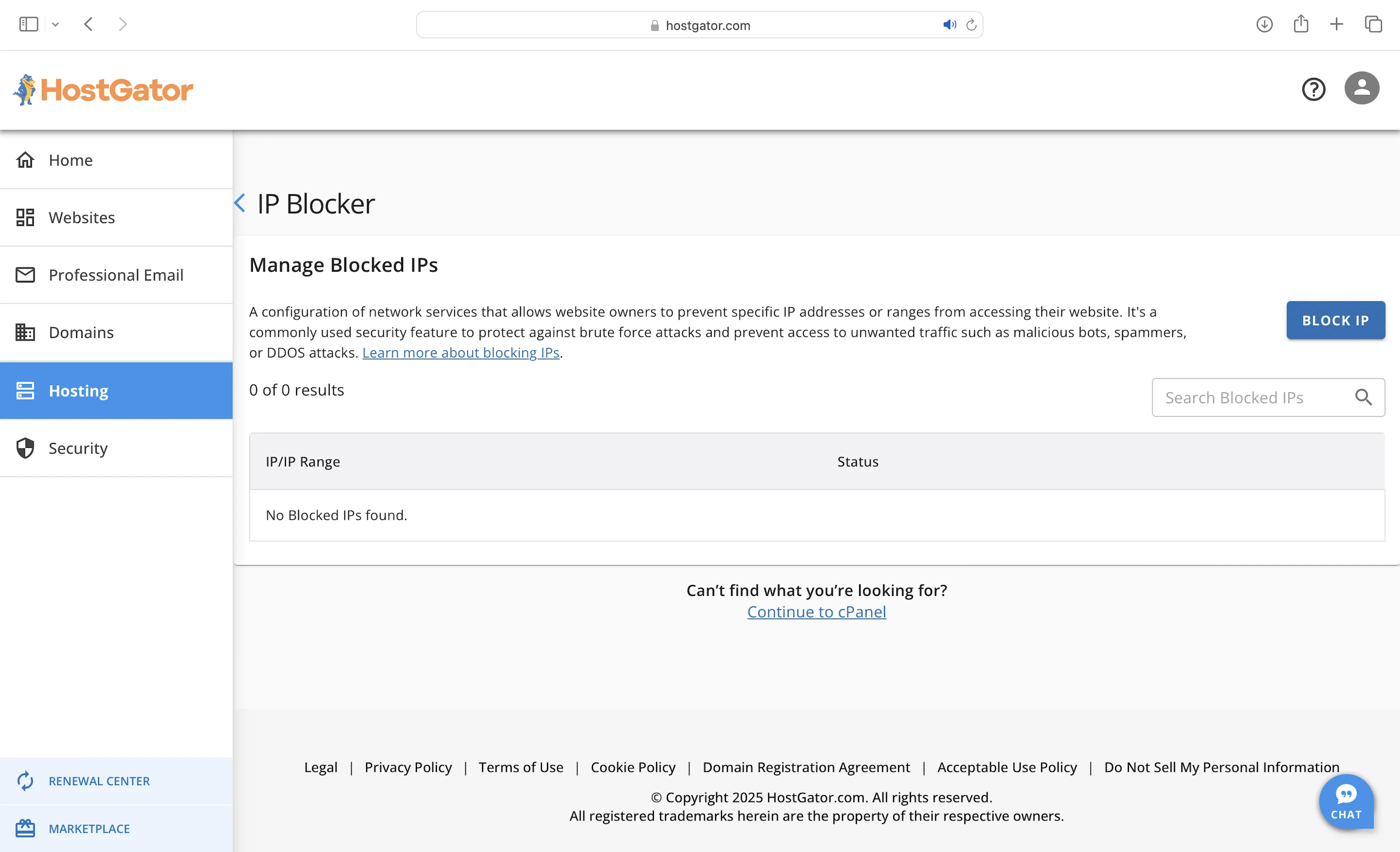
- IP blocker
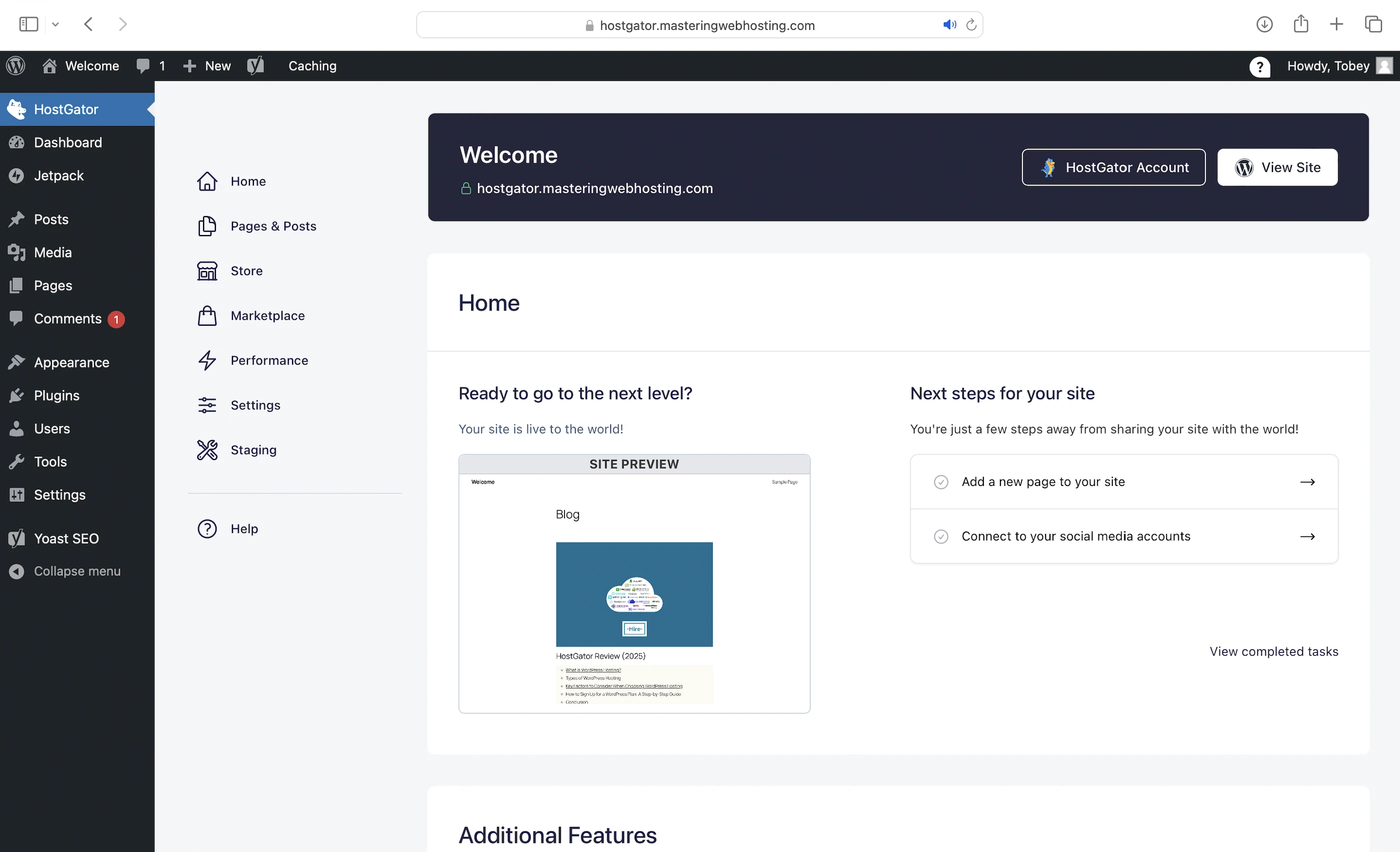
- A dashboard that looks like Bluehost’s lol
This plan starts at $16.99/mo for a 1-year plan (Renewal, not promotion price).
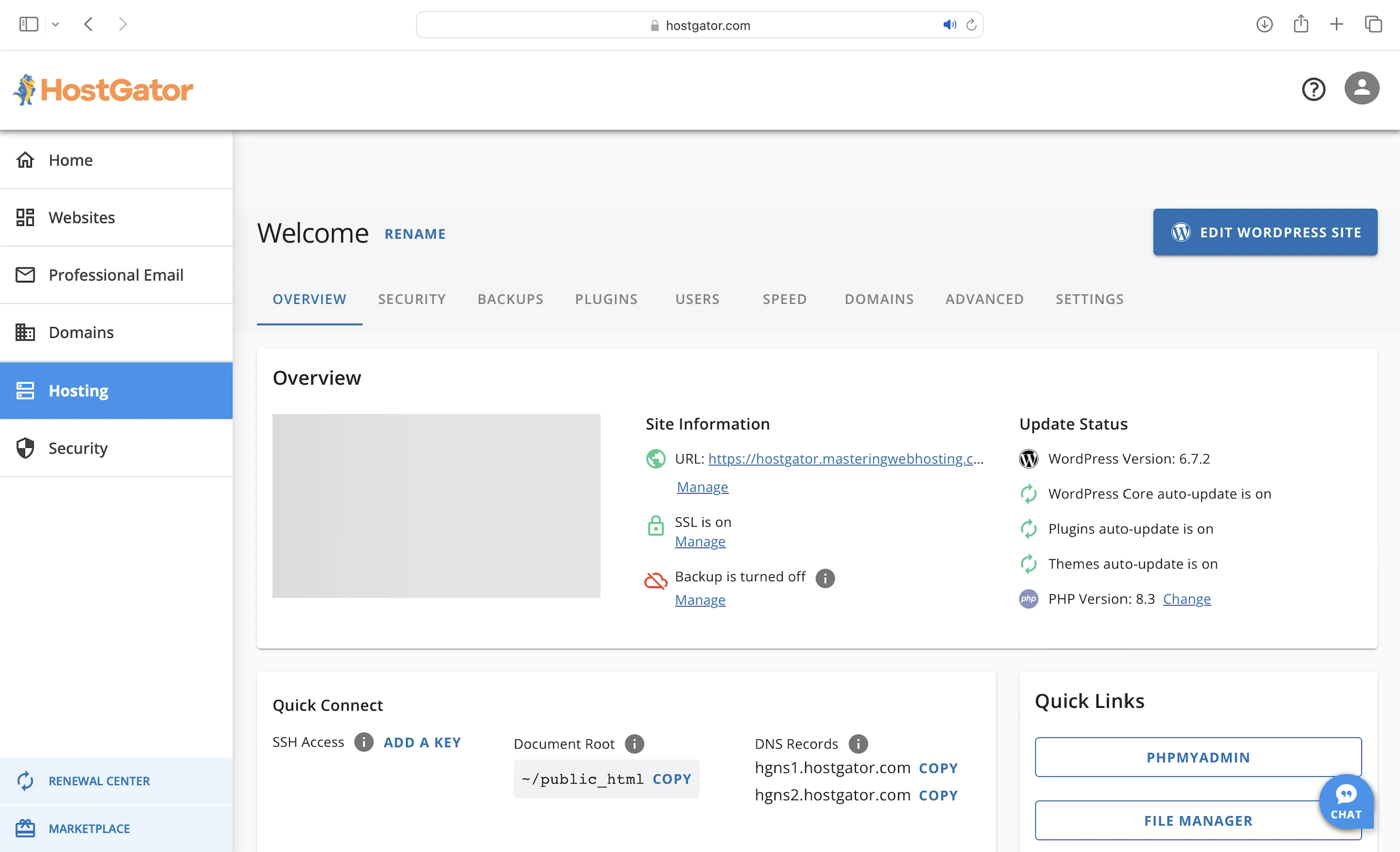
Like with Bluehost, I wasn’t happy with this level of detail, so I contacted the HostGator Support team for more information. This started well.
3. Speed Features
WordPress Plugin
HostGator’s free plugin comes with:
- Static content caching: Speeds up load times by caching assets like images, so they display faster when someone visits your website.
- Image optimization: Compresses your images and converts them to the WebP format, so they load even faster for your visitors.
CDN
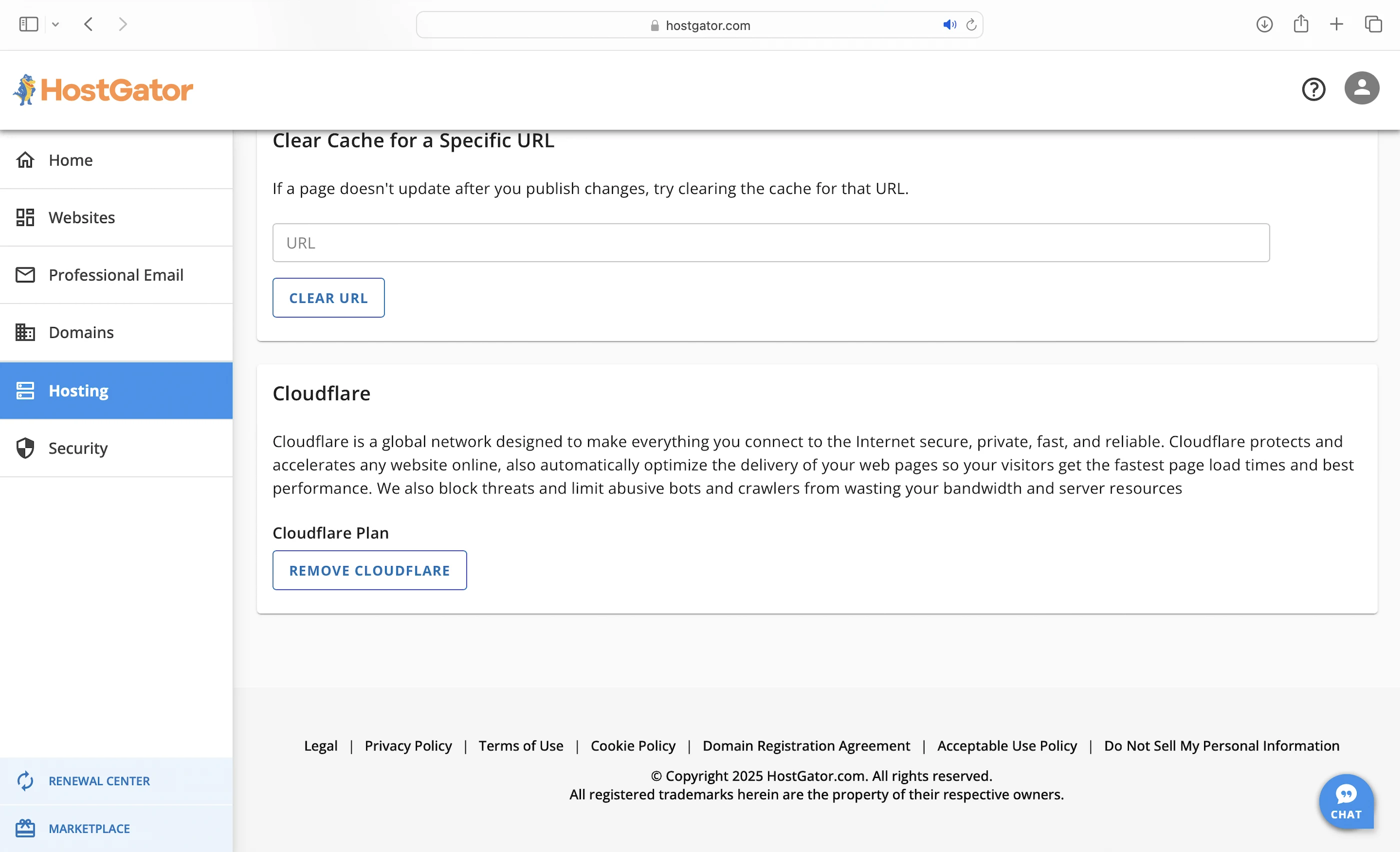
HostGator uses Cloudflare to cache your website across 335 cities worldwide and deliver content to them along optimized routes with Argo Smart Routing.
4. Security Features
CDN
As the point of entry to your site, Cloudflare is also your primary defense at the edge with features like:
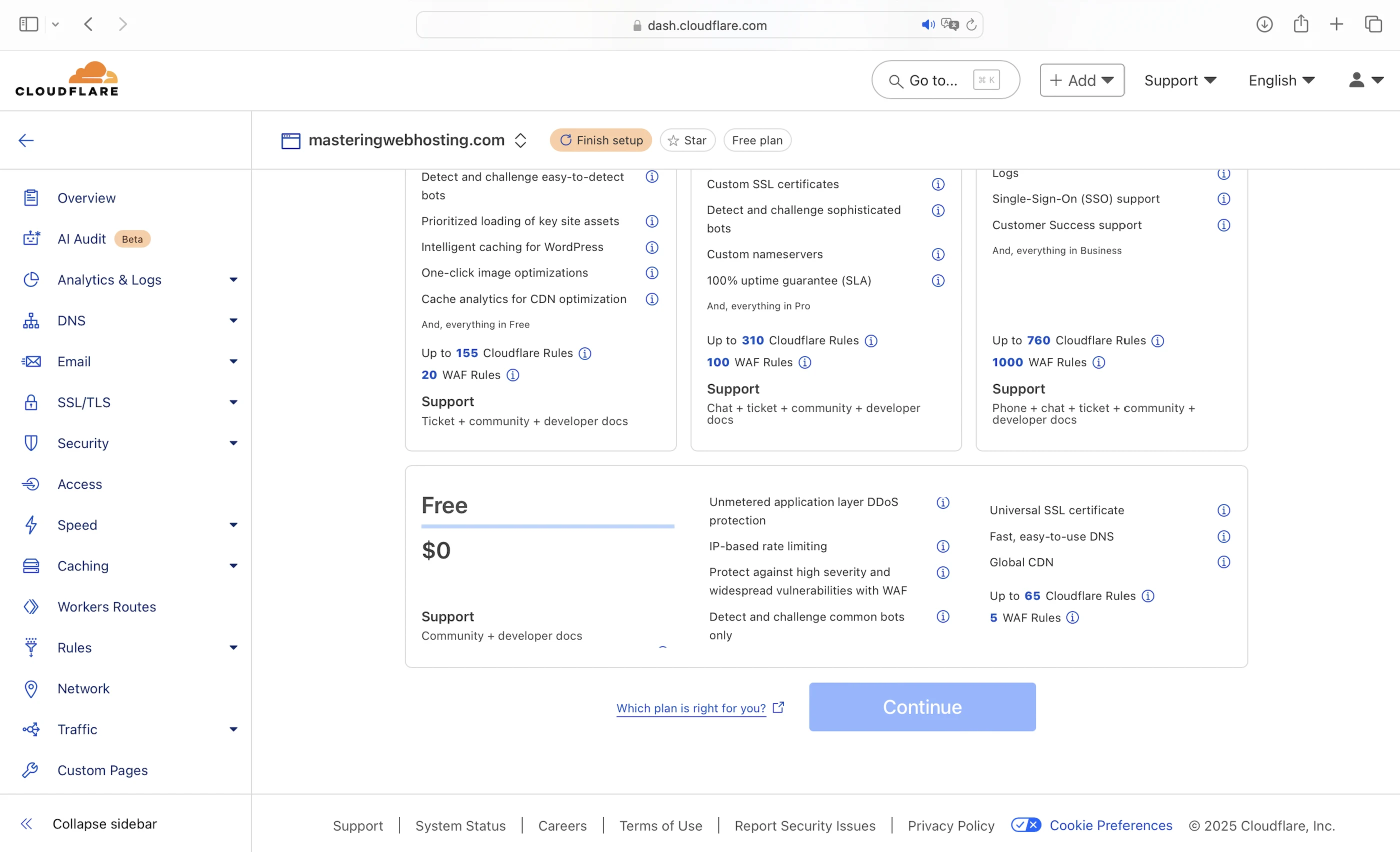
Like Bluehost though, Cloudflare is also your only line of defense unless you get SiteLock.
Malware Protection
Starting at $7.99/mo.
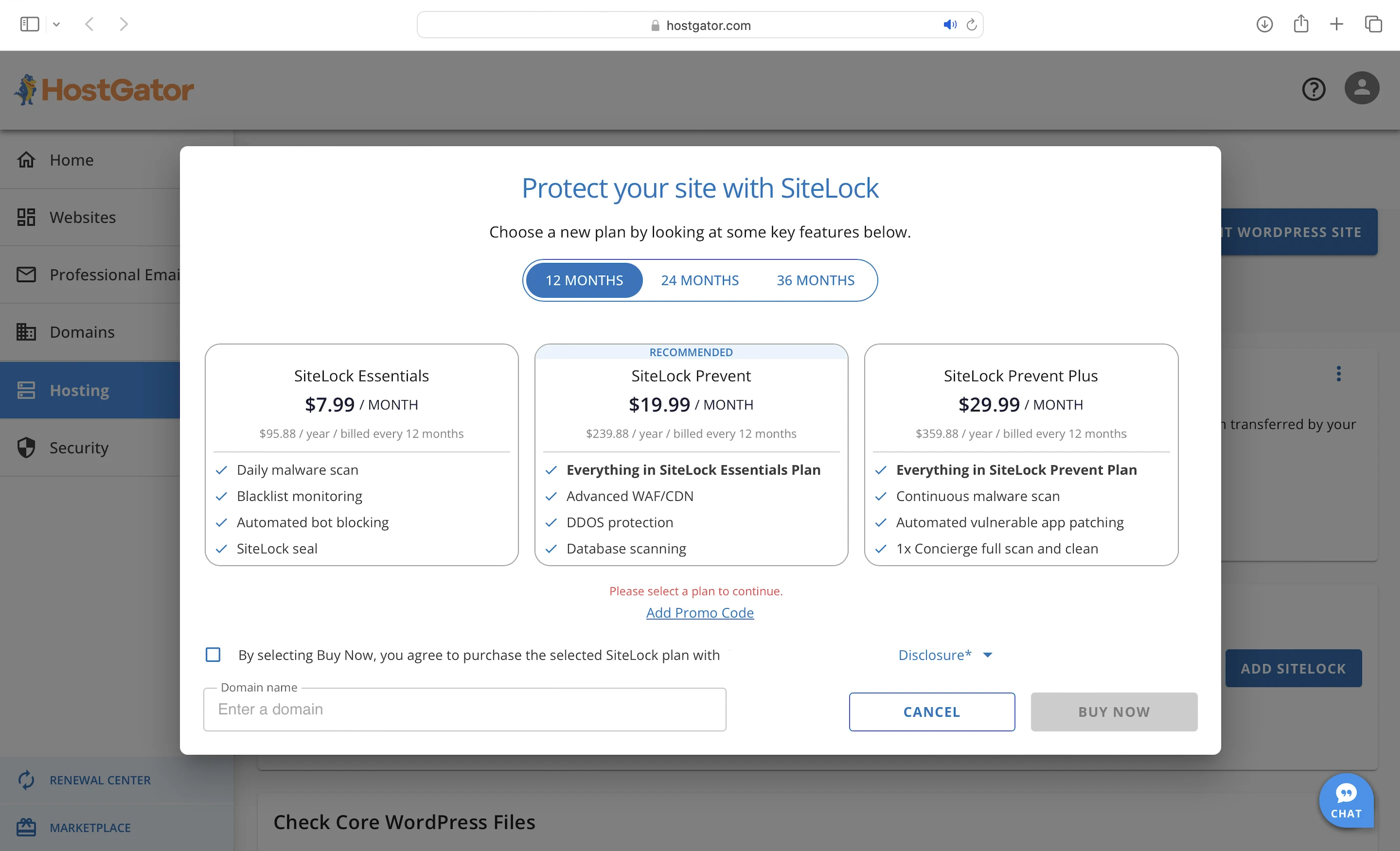
Support says SiteLock helps to protect your website from malware infection, but I am a bit skeptical.
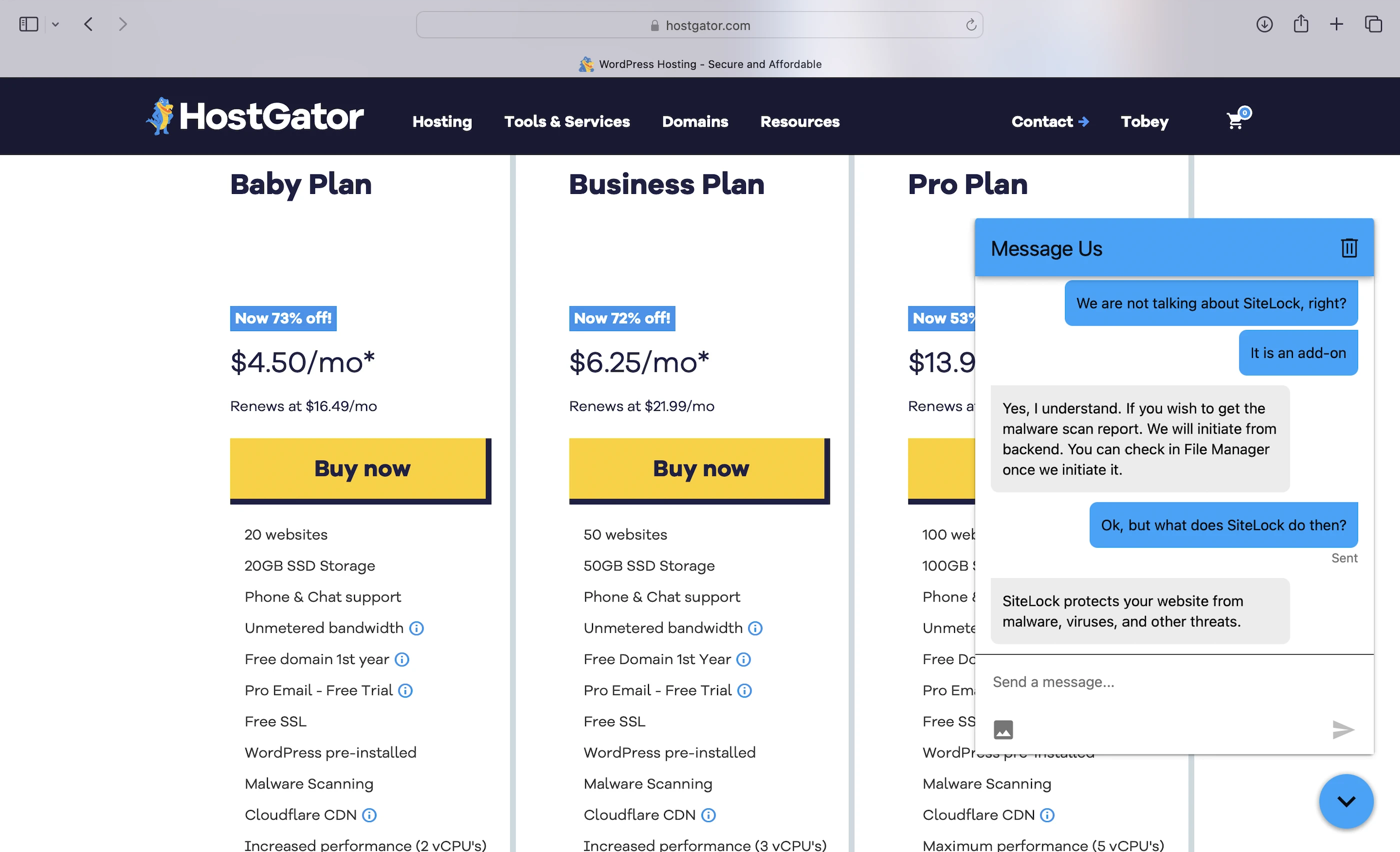
If other online reviews are to be believed, it seems SiteLock has a pretty scummy reputation. Some users reported that they would charge you extra to repair your compromised website, effectively holding you ransom.
Not sure if this is real because I haven’t experienced it myself, but there are way too many similar stories out there to ignore.
Malware Scanning
That said, if SiteLock is really good and your website got infected because you didn’t get it, you can request a free malware scan from Support and they’ll run it in the backend.
IP Blocker
Finally, you can get your hands dirty by blocking suspicious IP addresses in the dashboard or cPanel. However, you’d need to go through your logs to find out who’s attacking you.
5. Bluehost-lite or Bluehost-plus?
If you have read my Bluehost review, you’d see that the features listed above are directly copied from there.
So far, HostGator is reinforcing the public perception that it’s essentially Bluehost’s twin, but here’s where the family resemblance ends.
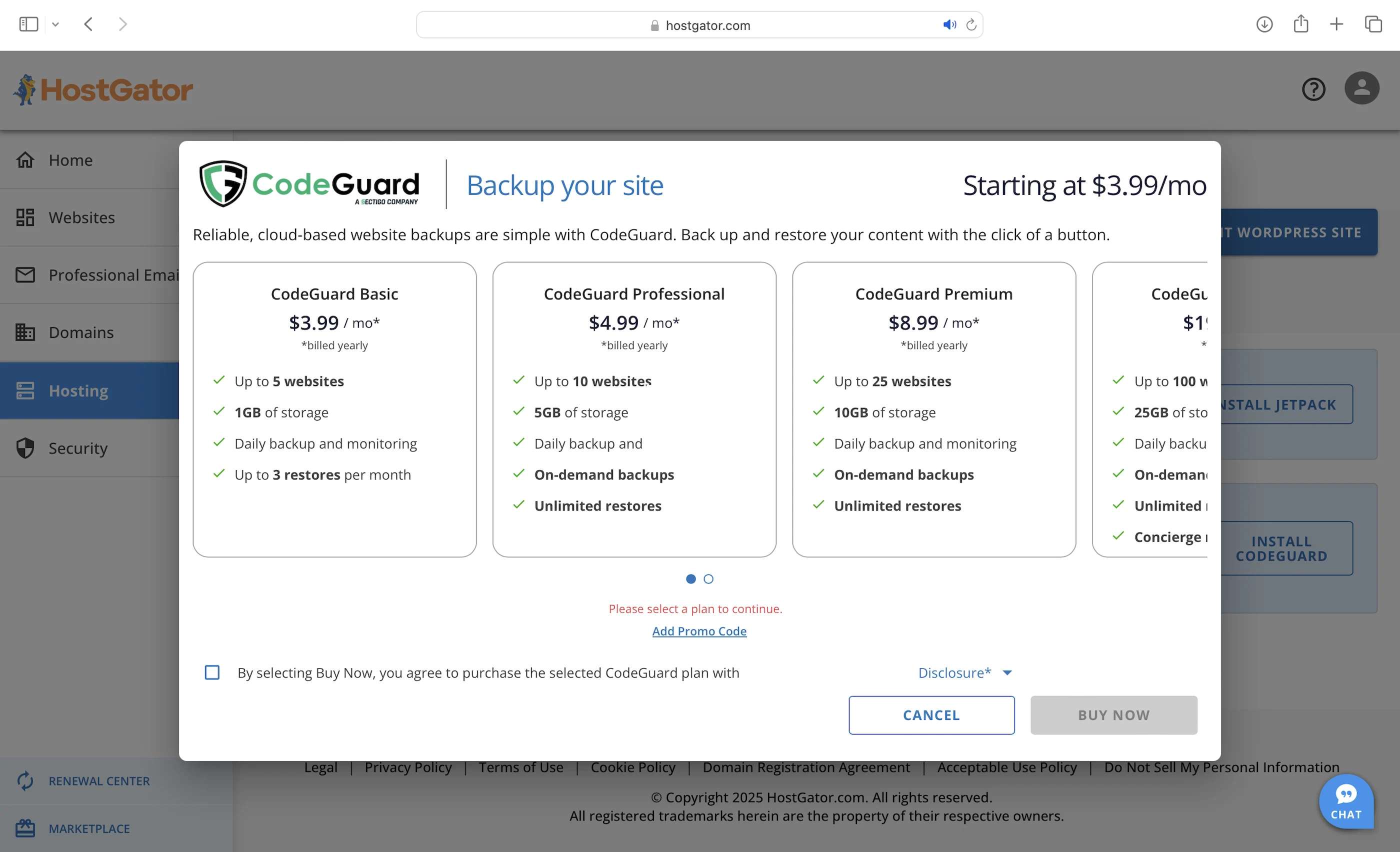
Unlike Bluehost, HostGator only backs up your website if you get its CodeGuard add-on (starting at $3.99/mo), while Bluehost does it for you with a free CodeGuard.
HostGator also doesn’t have an AI-powered website design generator, unlike Bluehost. Not that this is a factor in evaluating if HostGator’s a good host to me. I tested the only things that actually matter below.
6. Speed Test
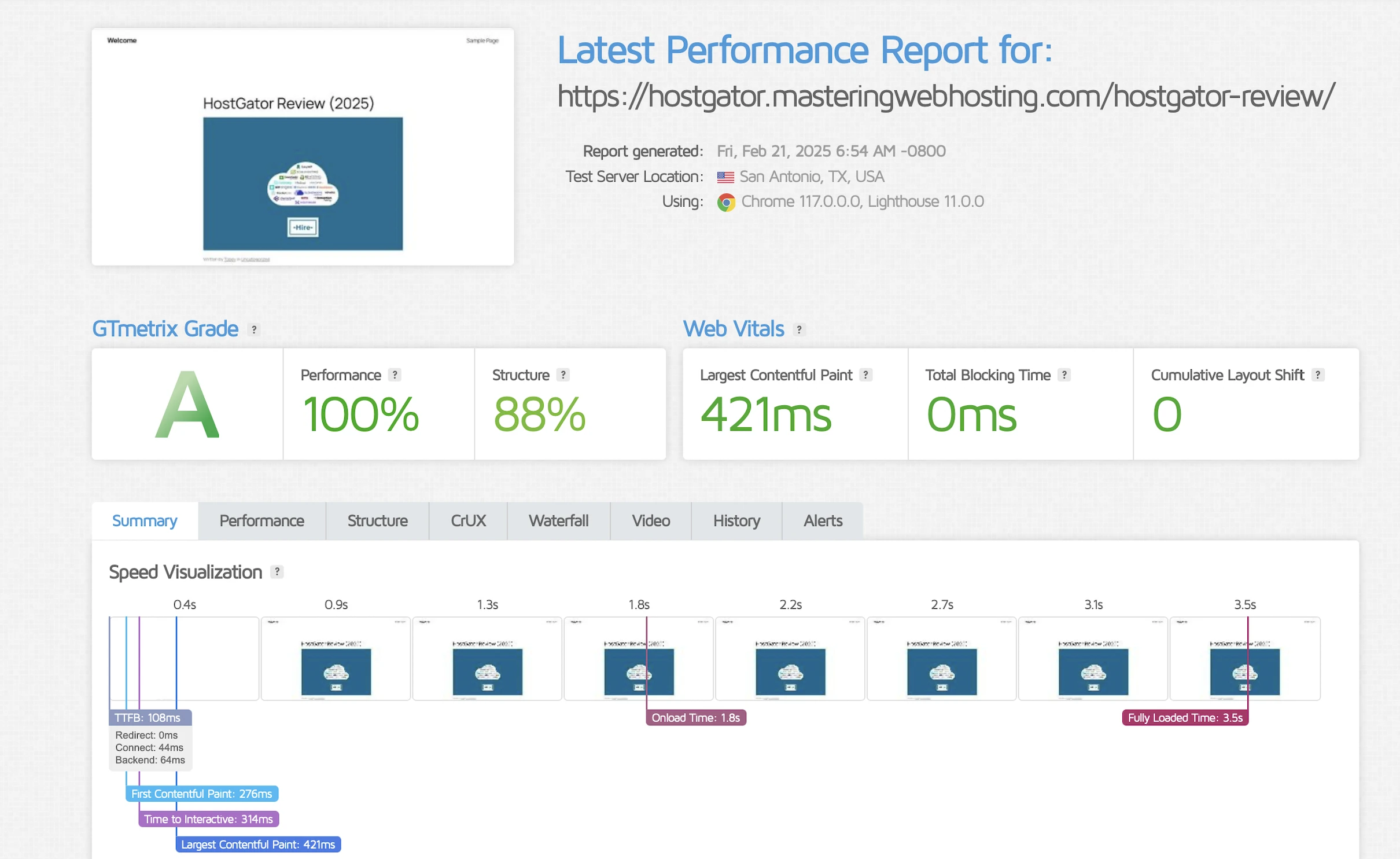
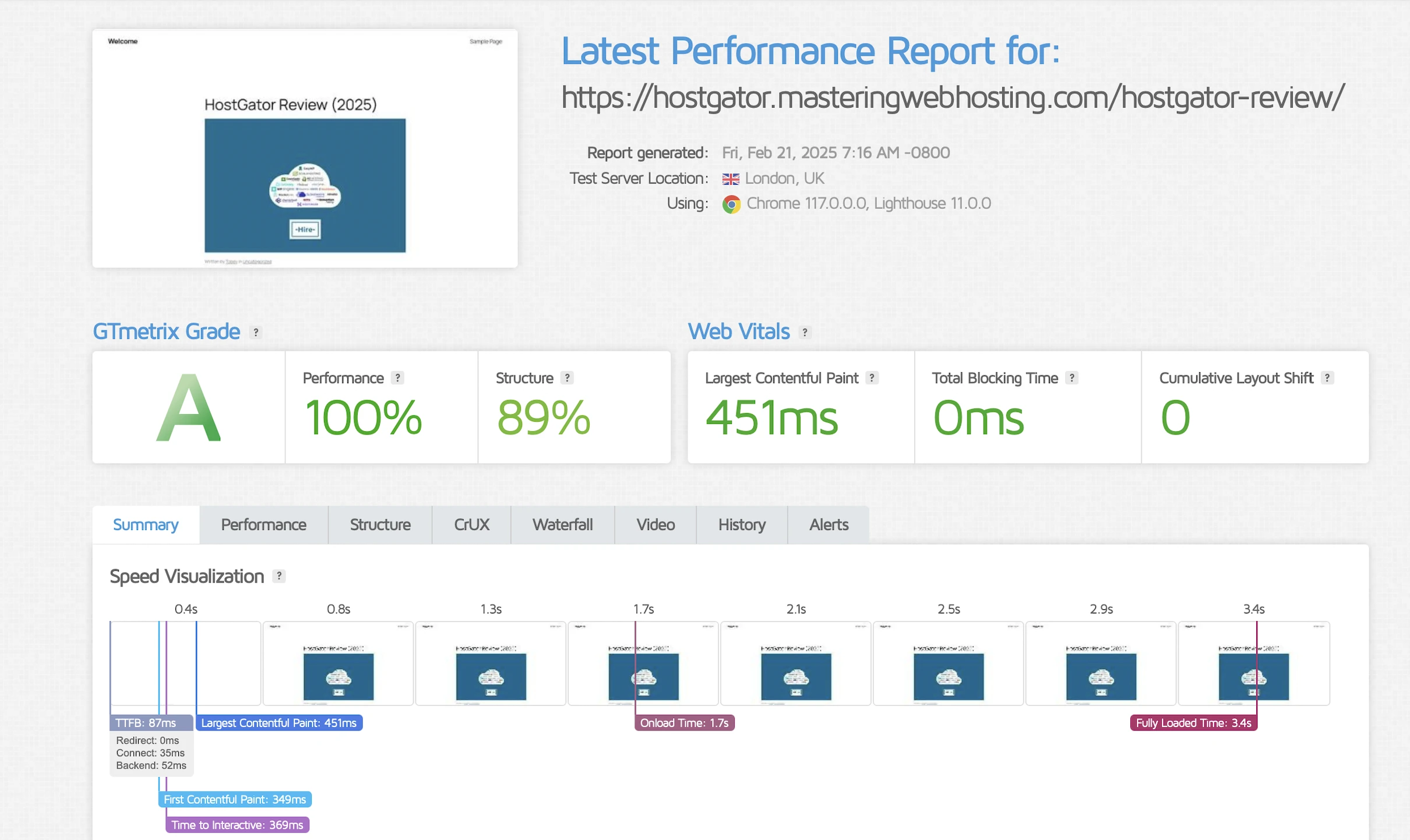
GTMetrix said my Largest Contentful Paint (LCP) was a really meh 421ms in Dallas and another meh 451ms in London.
7. Security Test
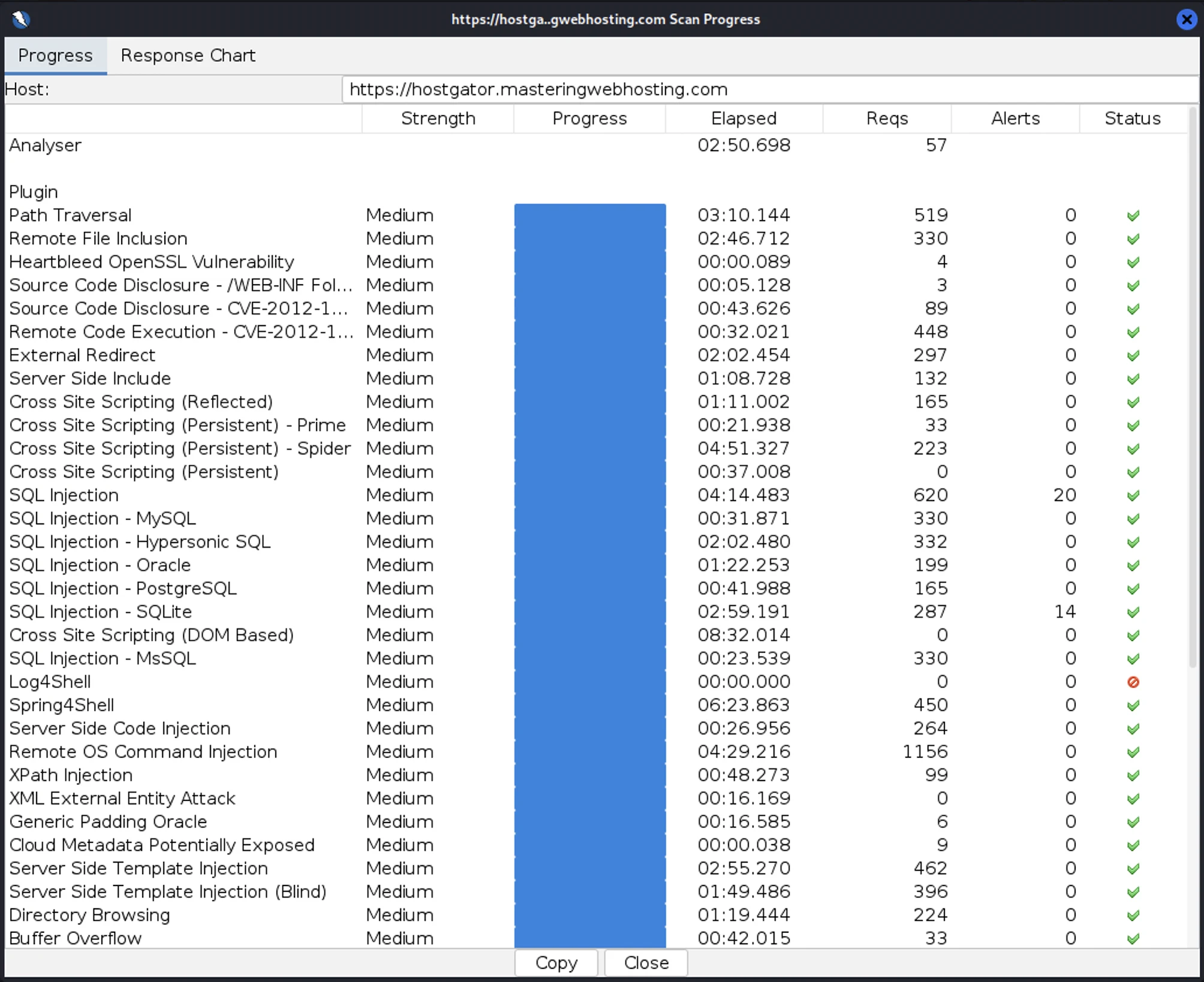
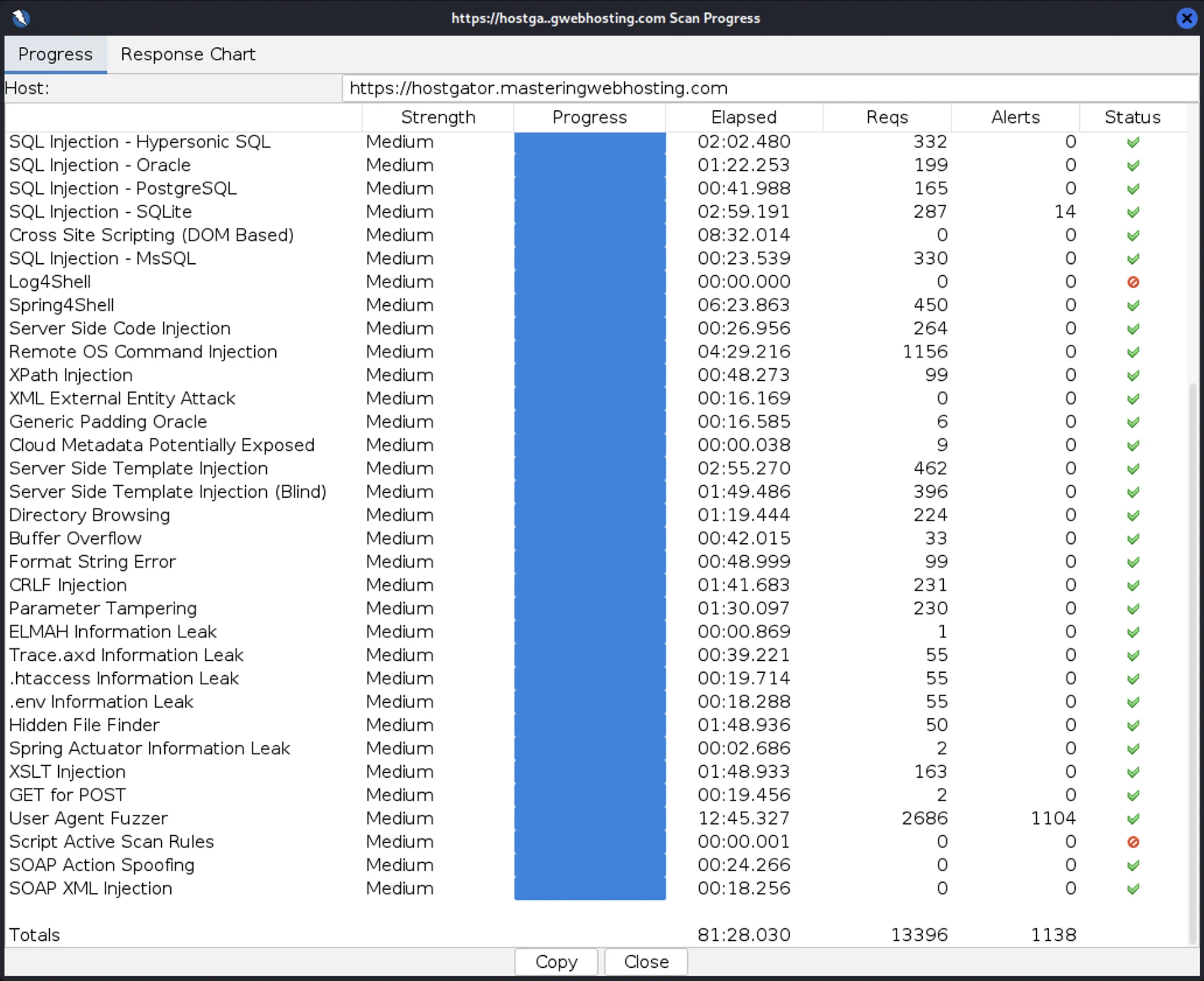
I launched 13,396 cyberattacks against my HostGator website:
- 2 out of 30 high risk vulnerabilities detected:
- SQL Injection: 20 out of 620 attacks successful. The second worst I have seen in any hosting provider. Guess who’s the first?
- SQL Injection – SQLite: 14 out of 287 attacks successful. Okay as HostGator doesn’t use SQLite.
- 0 out of 12 medium risk vulnerabilities.
- 1 out of 2 informational risks. 1,104 alerts but these aren’t vulnerabilities.
- Success Rate: 12,258 or 91.5% of my attacks were completely neutralized.
8. Uptime Test
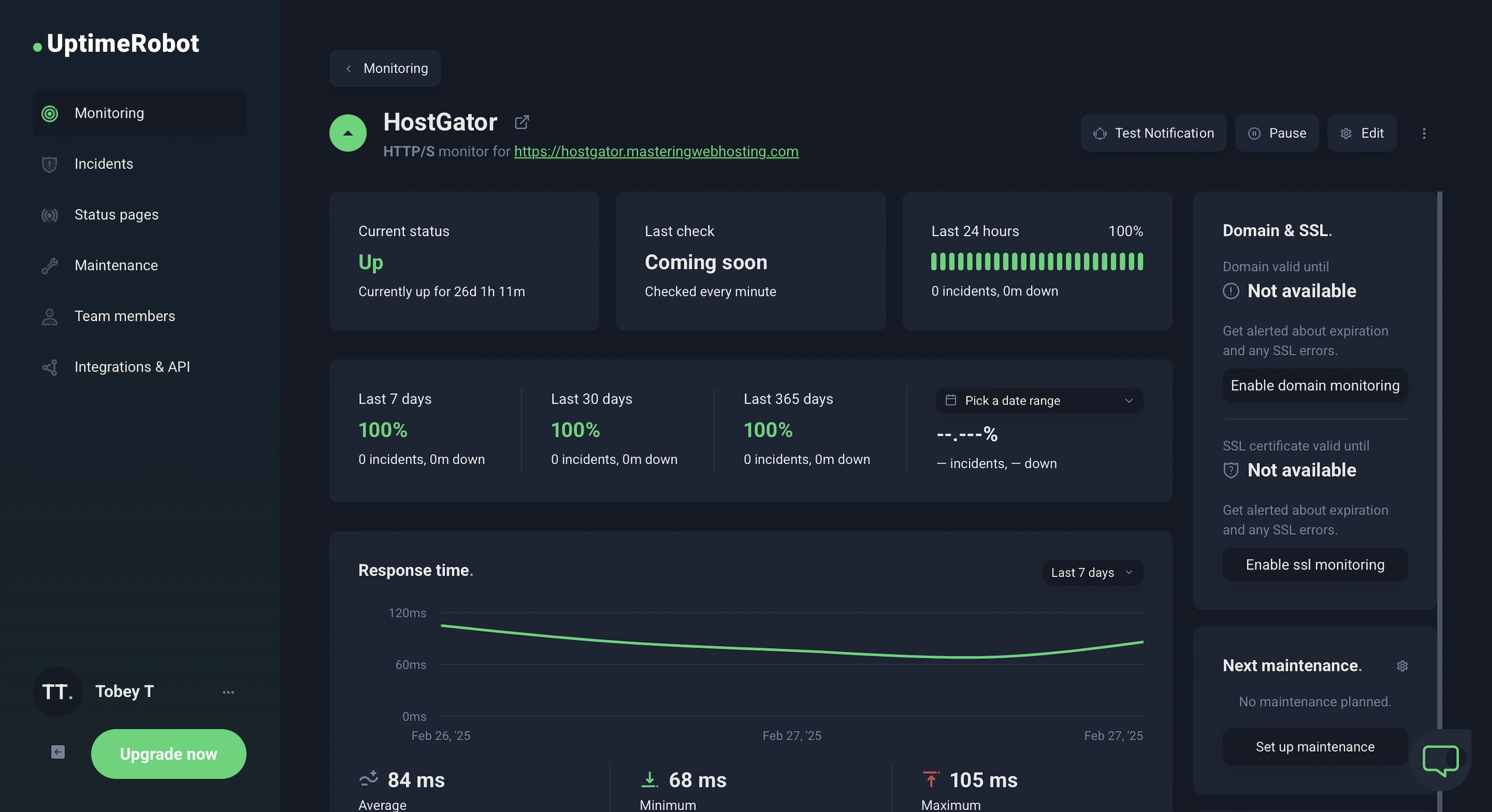
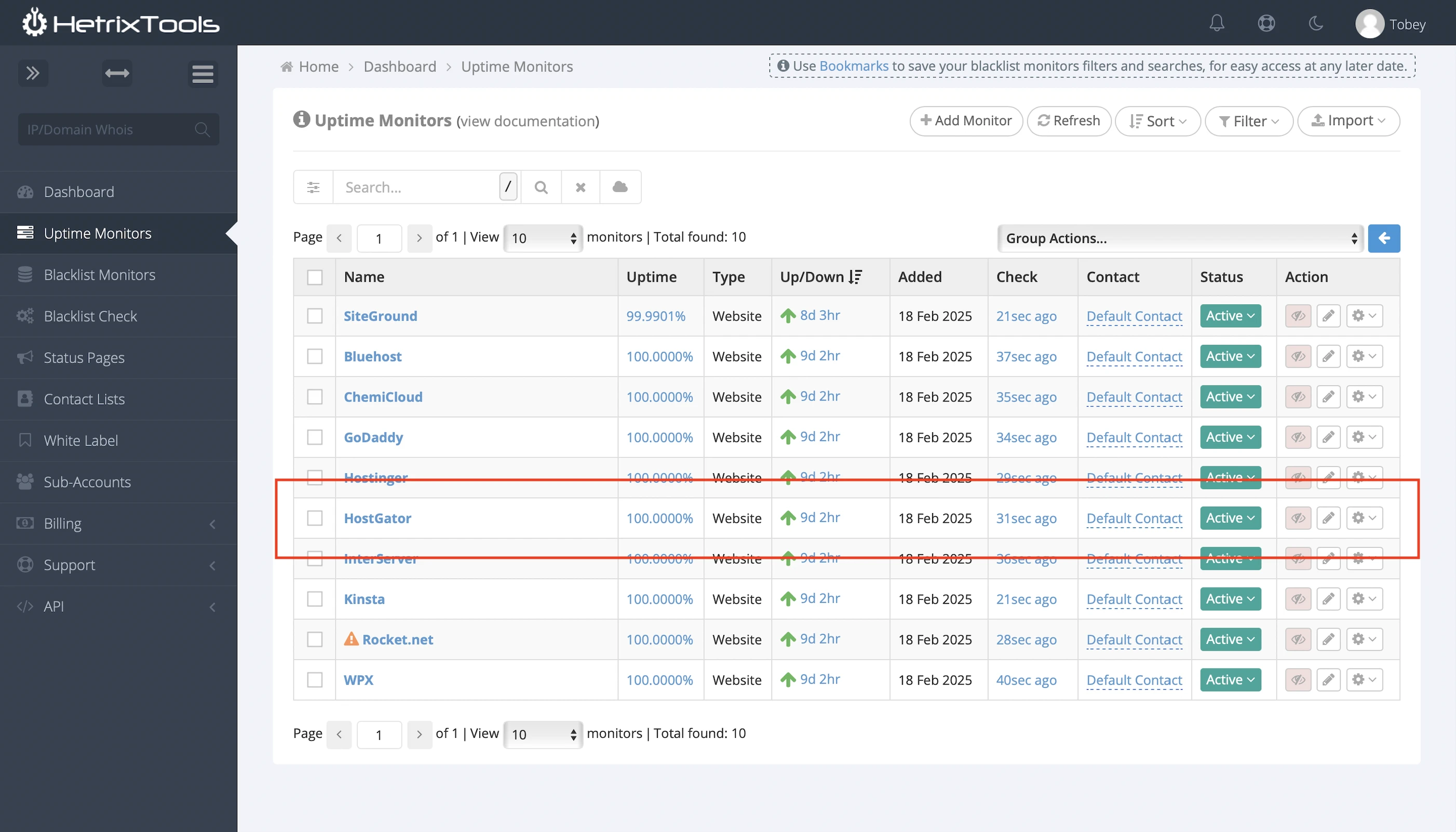
In the 20 days I was testing it, UptimeRobot reported that my HostGator website enjoyed 100% uptime after checking on it every minute.
HetrixTools reported the same results after monitoring my website at 1-minute intervals for 7 days.
However, like BlueHost, HostGator doesn’t publish its current system status or even outage history, while other hosts do so with details like start times, fix updates, and resolutions.
Heck, even its X (formerly Twitter) page is practically dead.
So like Bluehost, you won’t get wind of major outages.
And the best part? HostGator doesn’t guarantee a minimum uptime, unlike most decent hosts.
Again, HostGator just doesn’t pass the vibe check.
9. Cons
Note: You might wanna skip this if you have already read my Bluehost review—HostGator has almost the exact same cons.
MySQL
Slower than MariaDB. I don’t know many hosts still using it, besides Bluehost and SiteGround.
Image Optimization Failures
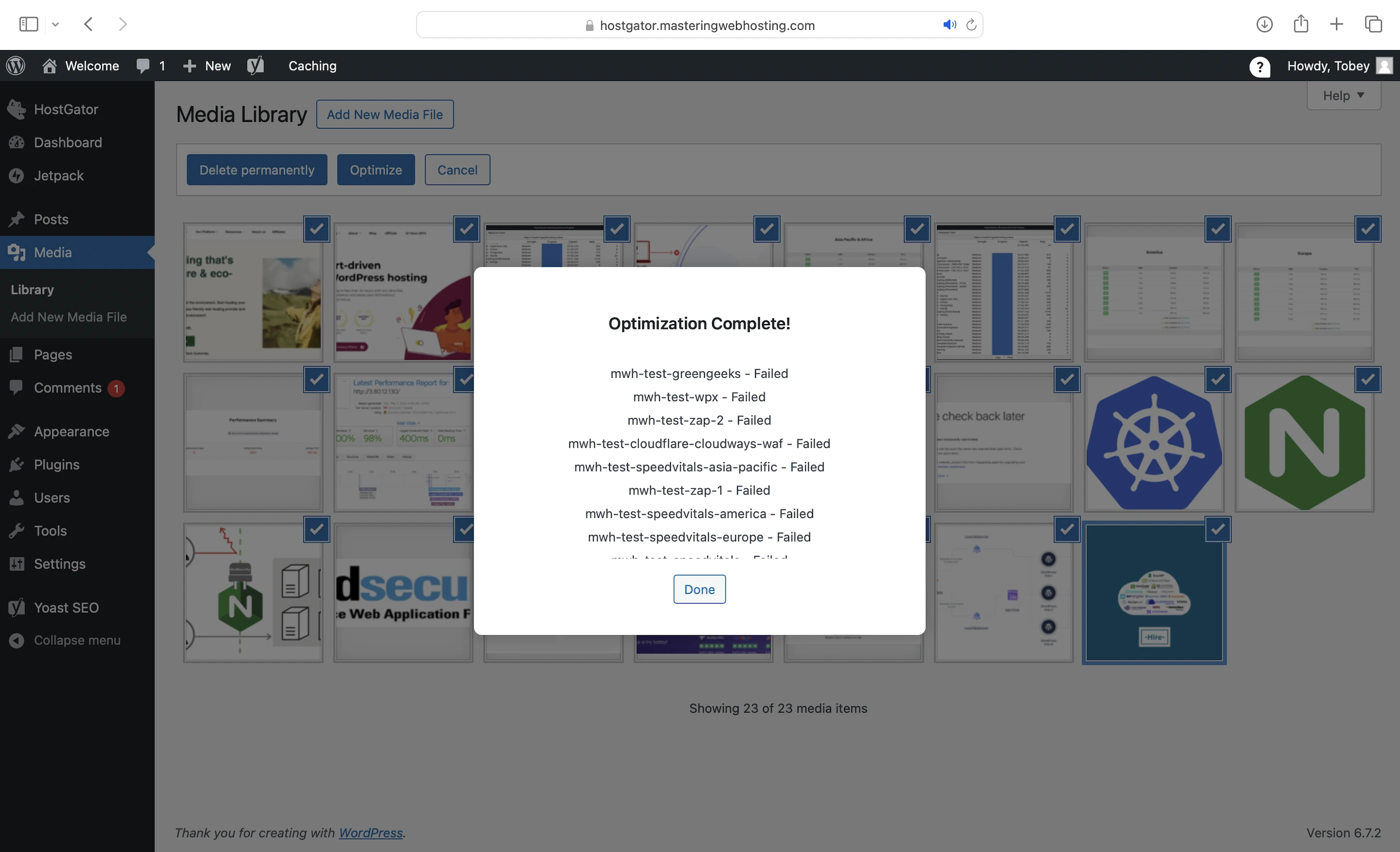
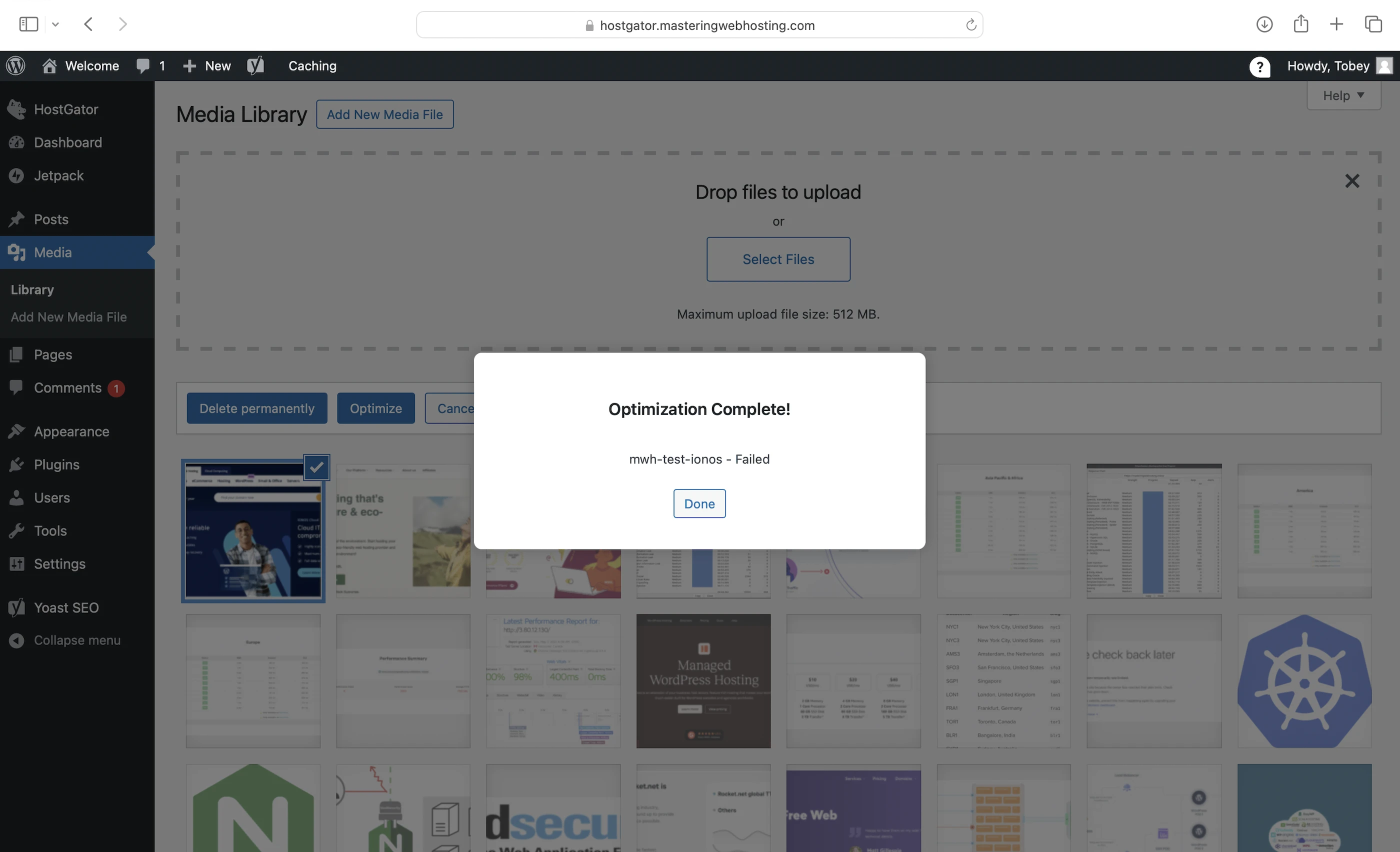
None of my images (existing or newly uploaded) were successfully optimized using HostGator’s plugin.
No Designated RAM
HostGator says it’s only available in its VPS or dedicated hosting plans.
No Opcode Cache
Again, only available in its VPS hosting plans, while many other hosts include OPcache for free. When your PHP code runs to load a web page, it’s compiled into opcode, or machine-readable instructions that generate the HTML your visitors see in their browser. Without OPcache, this compilation happens on every request, slowing down your page load times.
PHP Workers Unknown
Specifically, PHP workers handle the process of compiling your code into opcode when there’s a request. Each worker can only handle one request at a time. So, the fewer workers you have, the fewer requests your website can handle concurrently, slowing down your page loading times again.
No Object Cache
Only available in HostGator’s VPS hosting plans, while many hosts offer at least Memcached or Redis for free. If your opcode includes instructions to query your database, your PHP worker must retrieve the data with every request, even if it has been requested before. Since databases are slower than object caches, data retrieval is slower and your database might become overloaded with repeated queries.
No JavaScript (JS) Deferring
Unless you get the paid Jetpack Boost. This feature ensures that your HTML loads and renders correctly before JS files are executed in the proper order. Without JS deferring, some JS files can block this rendering process, causing your website to load more slowly or appear broken.
No Server WAF
Only available in its VPS hosting plans. You only have Cloudflare (and SiteLock) to protect your server. So if an attack gets past them, good luck.
No Uptime Guarantees
Seriously, Bluehost’s the same. What’s wrong with EIG hosts?
Scanty Hosting Plans
Wanna know how I know HostGator doesn’t offer any of the above? I had to contact Support for more details about my plan, because none of it was listed on its website.
No Website Backups
Good luck recovering your website if it gets infected with malware.
10. Evaluation
Let’s see how HostGator did against my self-hosting:
| Self-hosting | HostGator | |
|---|---|---|
| Speed (LCP) – Dallas | 306ms | 421ms |
| Speed (LCP) – London | 253ms | 451ms |
| Security | 0 | 2 high risk vulnerabilities (1 doesn’t affect WordPress). Second worst SQL Injection vulnerability. |
| Uptime | 95% | 100%, but no uptime guarantee, outage reports, or current system status. |
| Winner | 👑 |
11. Final Thoughts
HostGator isn’t just Bluehost’s twin—it’s a shadow of its more famous sibling.
And for good reason: WordPress sites hosted on HostGator have lesser features and slower speeds.
You can also see the EIG family resemblance:
- Same dashboard design.
- Same security weaknesses.
- Same lack of transparency in hosting plans and uptime.
- Same blatant upselling.
Genetic flaws that would have removed any other host from the hosting gene pool if it wasn’t privileged with pedigree and deep pockets.
Like EIG/Newfold Digital companies.
It’s a shame that hosts like HostGator get the spotlight when there are way better alternatives like WPX.
Like with Bluehost, writing this review was both slow and fast.
Slow, because HostGator plans weren’t as detailed as Bluehost’s, and l had to contact Support often just to fill in the gaps.
Fast, because HostGator and Bluehost were so similar it’s like writing 1 review for 2 hosts.
Leave a Reply